The Larapinta View · Private Letter
On the season after this one
Pessimism wears the suit of wisdom. A century of regional Australian families — and the numbers underneath them — say otherwise.
Pessimism wears the suit of wisdom. The investor who's gloomy about next year sounds careful, and the one who's hopeful about the next decade sounds glib. And yet the hopeful one has been right almost every time, which is the part the noise never quite admits.
The last letter ended at the kitchen table, with the families who have the work in place going back to the season they were in. This one is about what they're going back to, and why being long has quietly been the rational position all along.
Why pessimism sounds smart
The case for pessimism is a comfortable one to occupy, partly because our wiring rewards it. Decades of behavioural research find that people feel a loss about twice as sharply as a gain of the same size.1 So the doomsayer sounds analytical and the optimist sounds naive, even when the doomsayer is wrong.
The news economy makes it worse. A dramatic bad headline gets clicked and a steady good one doesn't, and social media has compressed the loop until gloom can feel like the only adult position in the room, when it's really just the loudest.
Type the coming financial crisis into a search engine and you'll find decades of it. People have been making the same gloomy prediction my whole career, and a fair while before that. Most have been wrong, and the few who got the timing right got the next decade wrong as well.
The families we work with are routinely invited into this room, by phone or by friend-of-a-friend or in the weekend paper. The wording changes. The pitch doesn't. It helps to be able to recognise it.
The ledger
What's harder to recognise, because nobody's selling it, is the quiet alternative: the century-long case for being long.
Here it is in a line. One dollar put into Australian shares in 1900, with the dividends reinvested along the way, would be worth a little over $1 million today. The same dollar in bonds gets you under $1,000. In cash, under $300.2
Since 1900, Australian shares have produced positive returns in roughly eight years out of ten.3 American shares, seven out of ten, across a century that included two world wars, the Depression, the Cold War, oil shocks, a pandemic, and a half-dozen recessions most of us have already forgotten.4 The bad years are real. They're also outnumbered.
There's a second number worth carrying around. Over the thirty years to 2025, Australian shares compounded at about 9.3% a year.5 Stay out for even the ten best trading days in a stretch like that and you'd have given up close to half of it.6
That's the real cost of pessimism, and you only ever see it later, in the returns a family never made.
The optimist plants
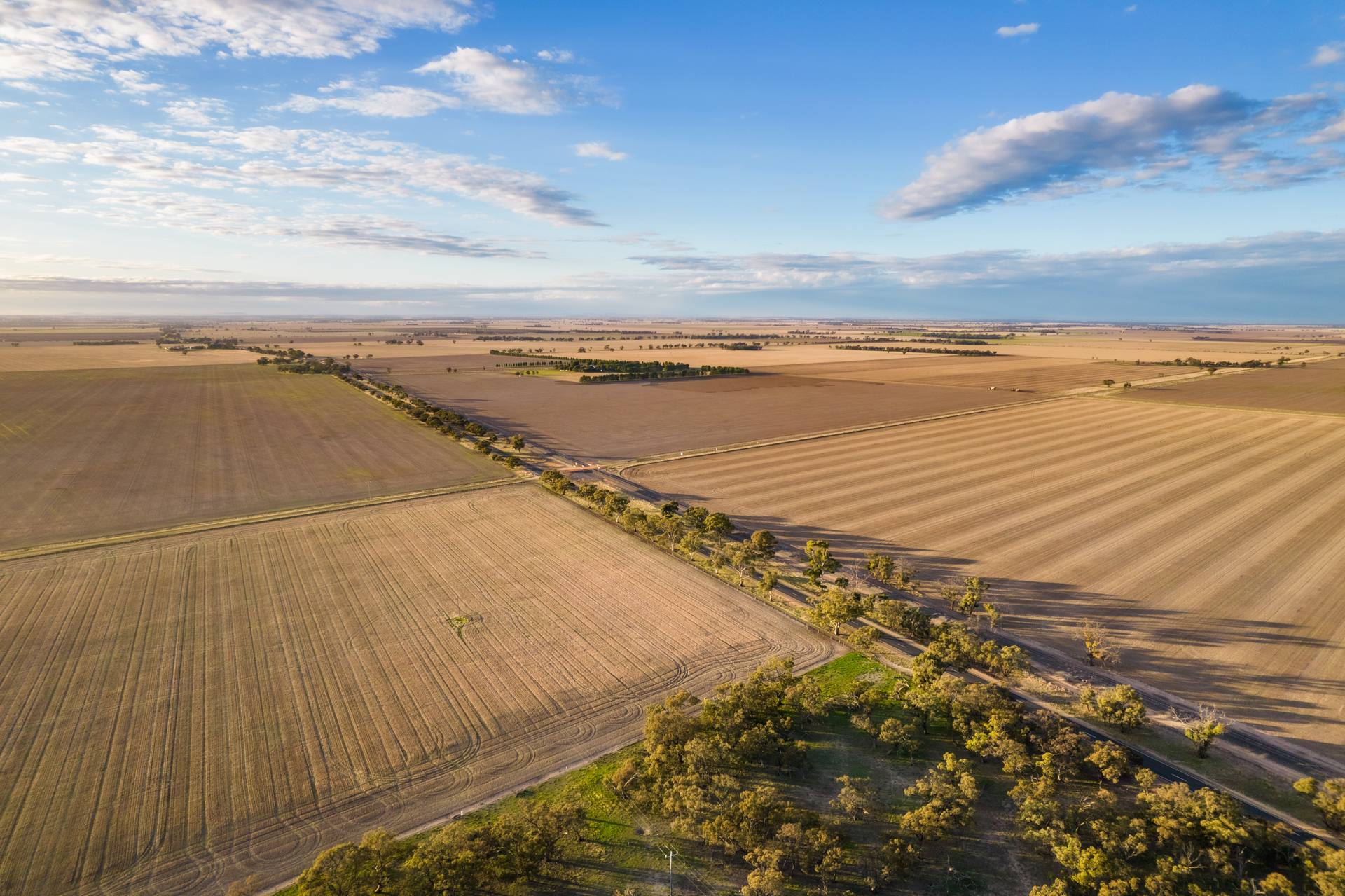
There's a phrase that gets repeated in farming country, worn smooth from use: the optimist plants. There's nothing sentimental in it. No crop goes in if you believe the rain won't come.
The families we work with already know this, because they've had to. A century of regional wealth, built across the farms and the family businesses and the holdings that have moved through three or four generations, was built by people who weren't naive about hard seasons and kept planting anyway. That's the actual track record of considered optimism: a paddock, a herd, a vineyard, a balance sheet that's compounded across droughts and floods and rate cycles.
We try to hold the same posture inside the portfolio. The Foundation is built for the long climb, and it isn't asked to sit in cash because someone on the radio used the word crisis. The Conviction sleeve is where a view gets expressed, but expressing a view costs the family money, so we're careful about what counts as evidence. Gloom in the morning paper doesn't.
There's a discipline in this worth being honest about. We aren't allowed blind optimism either. When a market gets euphoric and the crowd is piling in, that's information too, and the job sits between the two: long, and clear-eyed about why.
The seven or eight years in ten when markets are kind tend to look after the families who stayed in the room for them. Those are the families we work for, the ones who'll still be planting two and three generations from now.
Troy Armstrong
Senior Adviser & Founder
BCom (FinPlan), MFinPlan, SSA. Nearly two decades advising agricultural and regional Australian families. Founder of Larapinta Private. Based in the Yarra Valley, Victoria. Authorised Representative (ASIC AR Number 354299) of Capella Advisory Pty Ltd.